
By Ali, Manager · · 16 min read
Most Common Types of Collision Repair Services
Learn the most common types of collision repair services, from bumper repair to frame work, and what each costs at a certified Garland shop.
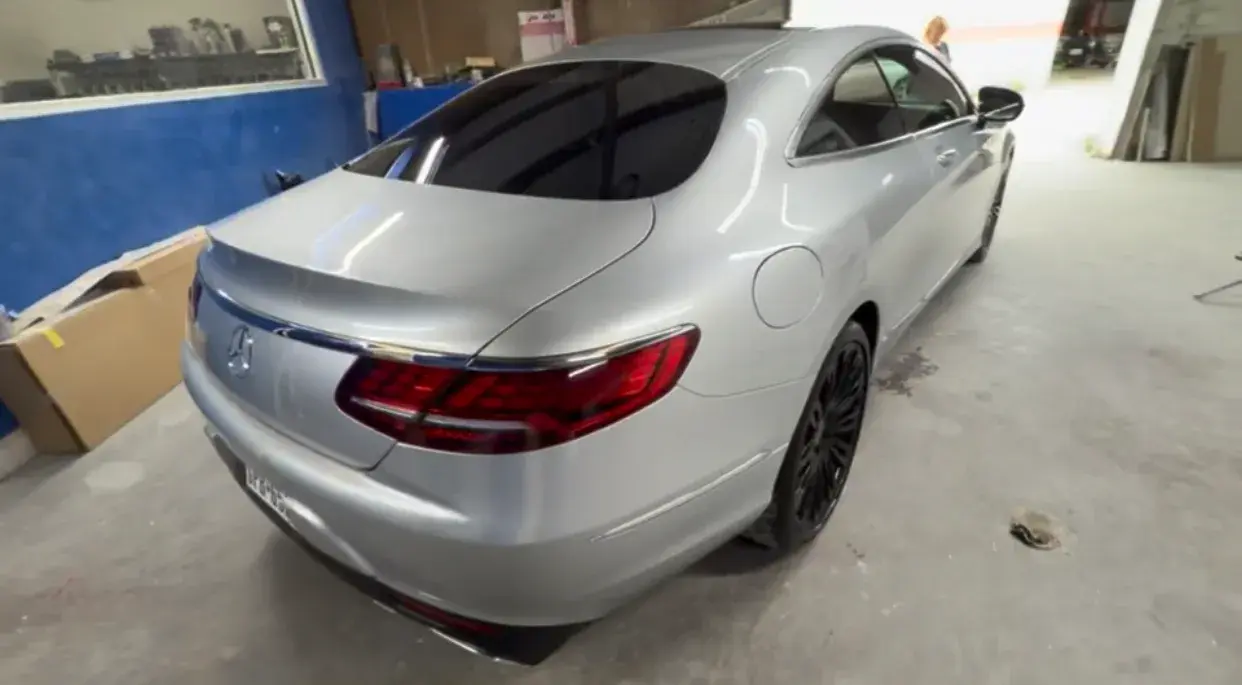
The most common types of collision repair services handle everything from a cracked bumper cover to a bent frame rail after a serious hit. Knowing what each one involves helps you make a smarter call when you are standing in a parking lot with a damaged car. At Texas Five Star Paint & Body, a 2025 Shop Of The Year In Garland based on verified reviews, we see front and rear-end collisions most often. Side-swipes and suspension damage follow, though that damage is not always obvious at first glance. The repair you need dictates the process, the timeline, and the cost. A shop that walks you through the specifics before writing an estimate is a shop that earns your trust.
You have probably heard someone say that a body shop "totaled" a car over what looked like a minor fender bender. That happens because hidden damage behind the bumper cover, inside a crumple zone, or to a sensor calibration can double a repair bill once the panels come off. The good news is that a thorough inspection catches those surprises before the work starts, not after. That is the standard we work to on every job that rolls into our Garland shop. We have repaired collision damage near the Shops at Legacy in Plano and completed full paint jobs on trucks off Preston Road in Plano. The same care applies whether the car is a daily commuter or a classic.
Key Takeaways- The most common types of collision repair services are front-end, rear-end, and side-swipe collision repair, plus bumper repair and paintless dent repair for smaller damage.- A cheap repair estimate usually skips steps: it misses hidden structural damage, uses aftermarket parts that do not fit right, and leaves ADAS sensors uncalibrated.- Bumper repair alone saves customers an average of 40% compared to a full replacement [1], and most jobs finish in about five business days.- A full collision repair averages two weeks once insurance parts are available, and our team inspects every panel under specialized LED lighting before the car goes home.
What Are the Most Common Types of Collision Repair Services?
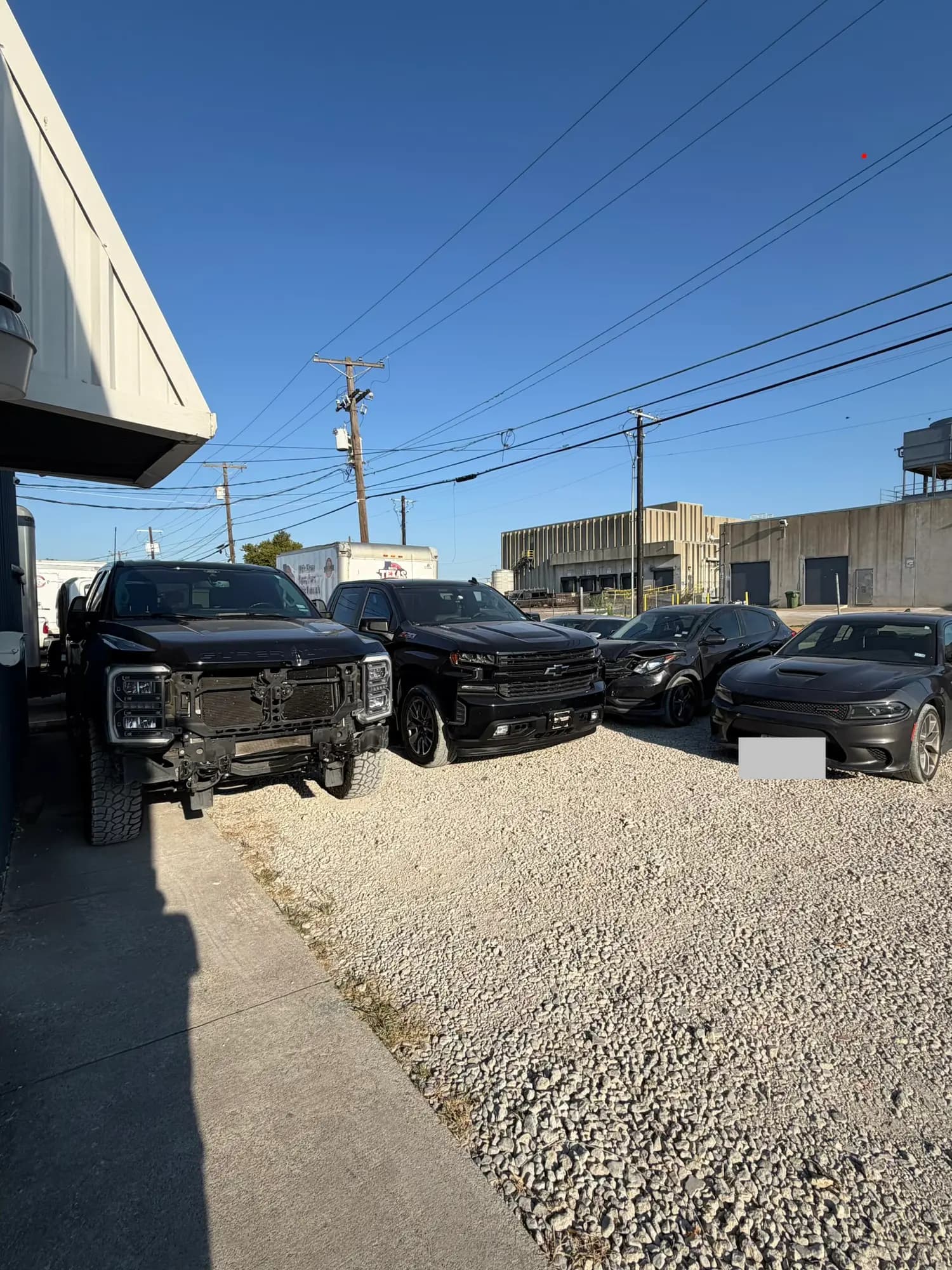
When a vehicle comes into our shop after an accident, the damage almost always falls into one of a handful of categories. The most common types of collision repair services we perform are the ones that follow the way cars actually hit each other on DFW roads: nose-to-tail on the highway, a side impact at an intersection, or a low-speed scrape in a parking lot. As a shop that is Certified Under State Of Texas and Auto Body Collision Certified, here is the full list of what we see day in and day out:
- Front-end collision repair: This is the repair we do most often. It covers the bumper, grille, headlights, radiator support, hood, and often the fenders. On newer cars it also means recalibrating the forward-facing ADAS sensors behind the windshield and in the front bumper.
- Rear-end collision repair: A hard hit to the back of a car pushes the bumper reinforcement into the rear body panel. It can buckle the trunk floor. Repairing it correctly means pulling the rear structure back to factory spec on a frame machine, not just hanging a new bumper cover.
- Side-swipe collision repair: These jobs usually involve two or more panels on one side of the vehicle. The damage looks long but shallow, and because it rarely reaches the frame, the initial estimate tends to be the most accurate of any collision type.
- Bumper repair: Not every bumper hit requires a replacement. When the cover is cracked but the reinforcement bar behind it is intact, we can plastic-weld and refinish the original bumper. This saves money and keeps the factory-fit panel on the car.
- Paintless dent repair (PDR): For door dings, hail damage, and small creases where the paint is not broken, PDR lets us massage the metal back from behind the panel. It preserves the factory paint and can be up to 50% faster than traditional bodywork [2].
- Suspension and steering repair: A wheel that takes a direct hit can bend a control arm, tie rod, or strut. These parts are replaced with OEM or high-grade equivalents, and the car gets a four-wheel alignment before it leaves.
- ADAS calibration: After any repair that disturbs a bumper, windshield, or side mirror, the sensors that feed your car's lane-keep, adaptive cruise, and blind-spot systems must be recalibrated. A sensor knocked a fraction of a degree out of alignment can go unnoticed after a minor fender bender, which means your safety systems might not trigger when you need them.
- Full paint and refinishing: Some collisions require blending color into adjacent panels so the repair is invisible. We use computerized color matching to read the car's actual paint, not just the factory code, and mix a formula that accounts for sun fade.
- Auto insurance claim repair: We work with every insurance company. For carriers we have not worked with before, we establish a relationship so the claim moves without the customer playing middleman.
- Hail repair: North Texas storms leave golfball-sized dents across hoods, roofs, and trunk lids. Our LED-lit inspection finds every single one, including the small ones an adjuster standing in a driveway might miss.
Every one of these most common types of collision repair services starts the same way at our shop. We wash the vehicle, pull it under our bright LED mapping lights, and inspect it panel by panel before we write a single line on the estimate.
The Problem with Cheap Collision Repair Services
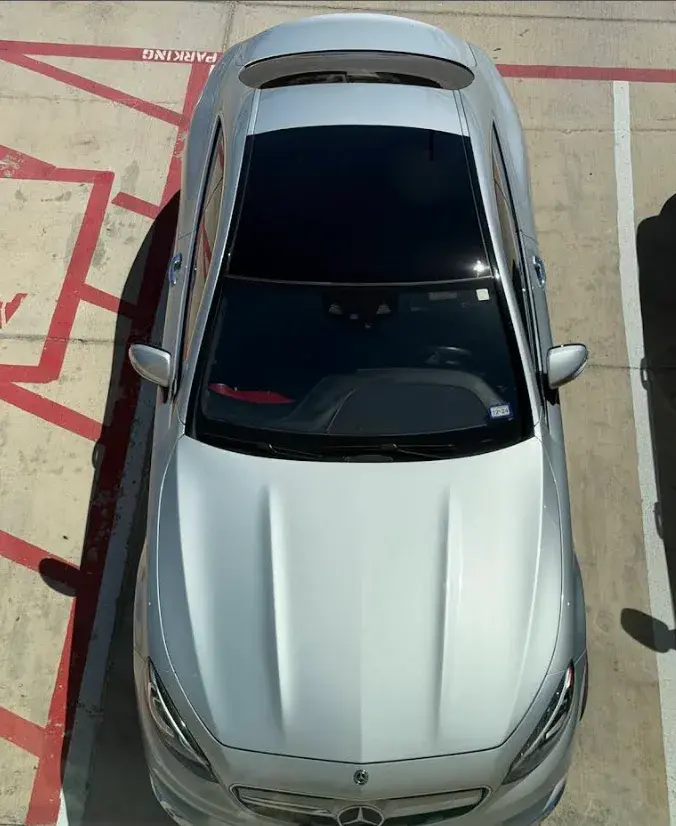
A low estimate feels like a win when you are already stressed about the deductible, but the cheapest collision repair usually costs more in the long run. The misconception we correct most often is that a repair is a commodity and the lowest bid wins. In reality, the cheapest quote almost always means missed work, skipped steps, or lower-quality parts that a shop is using to hit a price point instead of doing the job right. As a 2025 Shop Of The Year In Garland based on verified reviews, we have seen the aftermath of those shortcuts too many times.
We saw this play out on a 1967 Mustang Shelby GT500 that came to us for a carbon-fiber hood install. The hood itself was a specialty piece the owner had sourced, and the job should have been straightforward. But once we had the car under our lights, we found previous bodywork on the quarter panel that had been done poorly somewhere else. The filler was too thick, the panel was starting to ripple, and none of it had been corrosion-protected before paint. We pointed it out, and the owner decided to have us strip it to bare metal and redo it correctly while the car was already in the booth. The hood went on perfectly, and the quarter panel finally looked the way it should have the first time.
We had another vehicle come in with severe hail damage on six panels, a busted windshield, and a broken headlight. The owner assumed the car would never look right again. We worked each panel with PDR where the paint was intact, replaced the glass and the headlight with OEM parts, and finished with a full detail. The car came back looking better than when it was bought. That is what happens when a shop refuses to cut corners.
The real risk of a cheap repair is not just cosmetic. When a shop shortcuts the structural pull on a rear body panel, the trunk lid does not seal. Water gets in, and rust starts where nobody can see it. When they skip the ADAS calibration, your blind-spot monitor might miss a car one lane over. Factory-quality collision repair is not an upgrade. It is the baseline for a car that drives and protects you the way it did before the accident.
How Collision Repair Is Done Right
A proper collision repair follows a sequence that has not changed much in principle, even as the cars themselves have gotten more complex. The difference between a shop that gets it right and one that does not is in how carefully each step is executed and whether any are skipped to save time. Our team carries Auto Body Collision Certification, and that training shows in the process.
- Wash and LED-lit inspection. We clean the vehicle so nothing hides under road grime. Then we pull it into a bay with specialized LED dent-mapping lights that throw a grid across every panel. A dent that is invisible in flat daylight will cast a shadow under those lights. We find and count every single one before the estimate is written.
- Disassembly and hidden-damage check. We remove the bumper covers, lights, and damaged trim. This is the moment of truth: we look at the reinforcement bar, the absorber, the brackets, and the unibody structure behind the panel. What we find here often changes the repair plan and the supplement we send to the insurer.
- Structural measurement and pulling. The car goes onto a computerized frame machine that measures the unibody against the manufacturer's digital blueprint. We pull any point that is out of spec back using hydraulic rams until it reads within factory tolerance.
- Panel repair or replacement. Where a panel can be saved, we use PDR or traditional metal finishing. Where it cannot, we section in a new replacement panel. The decision is always driven by what will produce the strongest, most invisible repair.
- Primer, block sanding, and paint. We prime repaired areas and hand-block-sand them until the surface is perfectly flat. Our paint system uses computerized color matching to read the car's actual color, accounting for fade, and mixes a formula that matches in every light condition.
- Reassembly and ADAS calibration. We put everything back on the car with the correct torque specs and clips. Then the vehicle moves to our calibration area. We reset every sensor that was disturbed to the manufacturer's exact angles using target boards and diagnostic software. A sensor knocked a fraction of a degree out of alignment can go unnoticed after a minor fender bender. That means your lane-keep or automatic braking might not engage when it should.
- Final light-table check. Before we hand the keys back, the car goes under our bright inspection lighting one more time. We check every repaired panel for color match, orange peel, and surface finish. Nothing leaves with a flaw we would not accept on our own cars.
A recent job that came through the shop drove home why the inspection steps matter. A vehicle arrived with what looked like a straightforward rear bumper hit from a parking-lot incident. Under the LED mapping lights, we spotted a slight buckle in the rear body panel behind the bumper cover. Something the initial walk-around had not revealed. That buckle meant the impact had traveled past the absorber and into the structure. We pulled the cover, measured the panel, and found it was out of factory spec. The repair took some extra time, but the trunk seals perfectly and the bumper gaps are even. That is the kind of catch a rushed estimate misses. We apply that same standard whether the job is a full paint job on trucks off Preston Road in Plano or a small bumper scuff.
Collision Repair Costs and What Affects Them
For the most common types of collision repair services, a bumper repair runs $500 to $1,500, a front or rear-end collision runs $2,000 to $7,000, and a side-swipe runs $2,000 to $6,000. A full paint job ranges from $6,000 to $14,000. These are the real ranges we quote at Texas Five Star Paint & Body, based on the jobs we have completed across the DFW metroplex. The table below breaks down what moves each number.
Repair Type | Price Range | What Moves the Cost |
|---|---|---|
Bumper repair | $500 - $1,500 | Severity of the crack or gouge, and how close the damage is to adjacent panels that may need blending. The high end includes a replacement for lower-cost bumpers where repair is not possible. |
Front-end collision | $2,000 - $7,000 | The car's make and model drive this: newer vehicles pack more sensors, cameras, and complex headlight assemblies into the nose. ADAS calibration adds to the total. |
Rear-end collision | $2,000 - $7,000 | The rear of a car absorbs a lot of energy, so rear body panels, floor pans, and bumper reinforcements often need work beyond the visible cover. ADAS sensors in the rear bumper and taillights also require calibration. |
Side-swipe | $2,000 - $6,000 | Door skins and quarter panels are the main cost drivers. Because side impacts rarely reach the frame, these estimates tend to be the most accurate from the start, with fewer hidden-damage supplements. |
Full paint job | $6,000 - $14,000 | Vehicle size is the biggest factor: a coupe or sedan lands on the lower end, a full-size SUV or truck on the higher end. Previous road wear, rust, and paint oxidation add labor hours for prep. |
A full collision repair averages about two weeks to complete, depending on insurance parts availability [3]. A bumper repair, when it is a standalone job, typically takes about five business days. The timeline stretches when a supplement is needed, which is normal: the initial estimate covers what is visible, and the supplement covers what is found after tear-down. We have seen this on jobs ranging from a Tesla Model S bodywork and paint job to a full paint job on trucks off Preston Road in Plano. The process is the same regardless of the vehicle.
How to Choose a Collision Repair Shop
You have the right to pick your own shop after an accident, regardless of where your insurer suggests you go. Exercising that right comes down to checking a few concrete things before you sign a repair authorization.
- Read the reviews, but read them for specifics. A shop can have a high star rating and still be the wrong fit. Look for reviews that mention the type of repair you need, the car they brought in, and whether the shop communicated when something changed. We track our 602 and counting reviews [4] closely because they tell us what we are getting right and where we can sharpen up, and more than 500 of those are five-star reviews [5].
- Ask who inspects the car before delivery. At our shop, every repaired vehicle goes through a final light-table check under bright, angled lighting. That step is not standard at high-volume chains where a car gets pushed out as soon as the paint is dry. If the shop cannot name the person who does the final walk-around, keep looking.
- Check their certifications and awards. Our team carries Auto Body Collision Certification, and the shop was recognized as the 2025 Shop Of The Year In Garland based on verified reviews [6]. A shop that invests in credentials and earns third-party recognition is a shop that takes its reputation seriously.
- Look at their past work on cars like yours. A shop that does great work on commuter sedans may not have the experience to handle a classic car restoration or a luxury vehicle with aluminum panels. Ask to see photos of a job similar to yours. You can browse our paintless dent repair gallery or custom paint and refinishing portfolio to see the finish quality we deliver.
We repaired a collision-damaged vehicle for a customer near the Shops at Legacy in Plano, and the job was a good test of what a shop needs to get right. The damage was to the front corner, which meant the headlight assembly, the bumper cover, and the fender all had to be replaced and blended into the door. The parts came from the dealer, the color was matched with our spectrophotometer, and the forward-facing sensor was recalibrated before the car left the bay. The customer drove back to Plano with a car that looked and functioned the way it did off the lot. Lance Jernigan, who brought a vehicle to us for restoration, put it this way: "This is the best body shop I've ever experienced. Top notch quality and service. The father and son who run the shop are some of the most skilled professionals doing body work."
What to Do After a Collision
A car accident scrambles your thinking, and the decisions you make in the first hour can affect the repair for weeks. Here is the sequence we recommend to anyone who calls us from the side of the road.
- Make sure everyone is safe, then document everything. Get photos of all the damage from multiple angles, including wide shots that show the position of the cars. Those photos become evidence if the other party's story changes.
- File the claim, but do not commit to a shop yet. Give your insurer the facts, but remember that you control where the car gets repaired. The insurer's network shop is a suggestion, not a requirement.
- Bring the car in for a real inspection. A drive-by estimate written in a parking lot will miss hidden damage. We wash the vehicle and inspect it under our LED mapping lights before we put a number on paper, and what we find at this stage often changes the claim.
- Ask about deductible assistance. Depending on the scope of the repair, we offer up to $500 toward your deductible [7]. That can turn a stressful out-of-pocket cost into something manageable.
- Stay in the loop without being the middleman. Once the repair is authorized, we handle the back-and-forth with the insurance adjuster. You get updates as the job moves through the shop, and we are a phone call away if you have questions.
Our team brings hands-on collision repair expertise to every vehicle we touch, combining computerized frame straightening, factory-match paint systems from PPG and Axalta, and old-school craftsmanship. The goal is to return a car that drives straight, looks seamless, and protects you the way it was designed to.
Frequently asked questions
How much do you guys charge for a bumper repair?
A bumper repair at our Garland shop runs between $500 and $1,500. The final number depends on how large the damage is and whether the repair stays isolated to the bumper cover or requires blending into adjacent panels. For a cheaper bumper where the reinforcement is compromised, the high end of that range includes a replacement. Most standalone bumper repairs wrap up in about five business days.
Do you guys work with insurance?
Yes, we work with every insurance company. For carriers we have not partnered with before, we establish a relationship at the start of the claim. This keeps the process moving forward without you having to relay messages between us and the adjuster. We handle the supplement, the negotiation, and the paperwork so you get a repaired car, not a second job.
What services do you offer?
We handle hail repair, collision repair, bumper repair, paintless dent repair, scratch and paint chip repair, rust repair, auto insurance claim repair, custom paint and refinishing, auto restoration, and ADAS calibration, all under one roof. That means a car with multiple types of damage from a storm or a collision does not get bounced between shops.
How long does collision repair take?
The average collision repair takes about two weeks to complete, depending on insurance parts availability. A standalone bumper repair is closer to five business days. The timeline stretches when hidden damage is found after disassembly and a supplement is needed. This is normal and means the shop is doing a thorough job.
What makes Texas Five Star different from a big chain body shop?
We are family-owned, and owner Esmaeil personally inspects every vehicle under specialized lighting before it leaves. That kind of accountability does not exist at a high-volume chain where a car gets pushed through a production line. We also carry a five-year paint warranty on every job. We have earned recognition like 2025 Shop Of The Year In Garland based on verified reviews.
How do I get a free estimate?
Call us at (469) 583-7377 or request a free estimate online. We will get your vehicle into the shop, wash it, inspect it under our LED mapping lights, and give you a clear, written plan before any work begins. The estimate is free, and there is no obligation to proceed.
Collision repair is not one-size-fits-all. The most common types of collision repair services each come with their own process, timeline, and cost drivers. A front-end hit involves sensors and calibration. A rear-end hit often hides structural damage behind the bumper cover. A side-swipe is usually more straightforward but still demands a flawless paint match across multiple panels. The shop you choose determines whether those nuances are handled with care or skipped to save time.
At Texas Five Star Paint & Body, every repair follows the same sequence: a thorough LED-lit inspection, a transparent estimate, manufacturer-spec structural work. A final quality check under bright lights before the keys come back to you. If you are dealing with damage and want a shop that treats your car the way you do, call us at (469) 583-7377 or visit our shop at 214 Range Dr in Garland. We will walk you through the estimate, work with your insurer, and get you back on the road in a vehicle that looks and drives the way it should.