
By Ali, Manager · · 12 min read
How To Guide On Handling A Insurance Claim
A step by step guide on how to handle a collision insurance claim from a real DFW body shop. Learn the exact steps, timelines, and how to choose your own shop
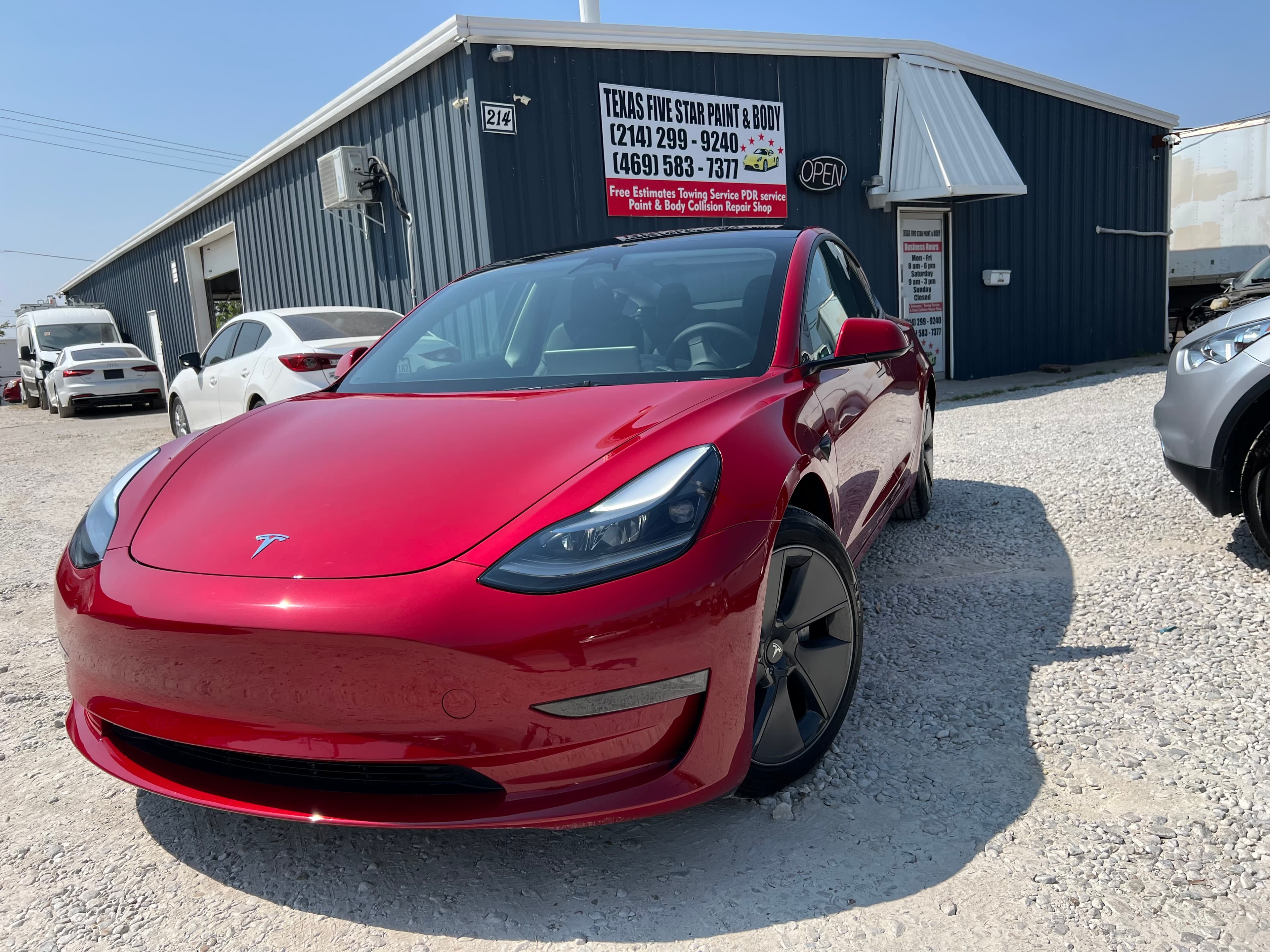
How To Guide On Handling An Insurance Claim
Filing a collision claim is a step-by-step process you can handle without losing weeks of your time or control over the repair quality. The key is calling your insurer within 24 hours, getting an in-person estimate from a shop you choose, and letting that shop coordinate with the adjuster. At Texas Five Star Paint And Body, we walk our customers through this exact sequence every day. Knowing how to handle a collision insurance claim from the accident scene to final pickup takes the guesswork out of the process, and this guide lays out each move in order.
We have spent more than 15 years building our shop around that sequence. Owner Esmaeil started Texas Five Star Paint & Body with a straightforward idea: give every vehicle the same attention you'd want for your own. Over 1,000 customers later, we have grown from a small Garland shop into a full-service collision repair, custom paint, and restoration facility serving everyday drivers and luxury car owners across the DFW metroplex. It is an approach customers notice - as Megan put it: "Getting into an accident was stressful enough for me, but the way Texas Five Star handled the repair process nearly made my stress disappear."
You just got hit. Your car is sitting in a driveway or a tow lot, and the insurance company is already sending you links to their network shops. You want the car fixed right, but you are not sure which step comes first. We agree that the process feels like a second job when you are already stressed. This article promises a clear, no-nonsense path through the claim. It previews the eight steps that take you from a damaged car to a finished repair, with a shop that works for you, not the insurer.
Key Takeaways- Call your insurer within 24 hours to open the claim, but do not commit to a shop until you have an in-person estimate from one you trust.- Texas law protects your right to choose any repair facility, not just the insurer's network.- A phone or photo estimate almost always misses hidden damage that a hands-on inspection catches.- The average collision repair takes about 2 weeks[1], but parts availability and hidden damage can extend that.- Front-end collision repairs at our shop range from $2,000 to $7,000[2], depending on part prices for your vehicle's maker and the extent of the damage.
Step 1: At the Scene of the Accident
The first priority is safety, then documentation. Move your vehicle out of traffic if it is drivable, turn on hazard lights, and check everyone for injuries. Call 911 if anyone is hurt. Once the scene is secure, pull out your phone and take wide-angle photos of both vehicles' positions, close-ups of all damage, the other driver's license plate, and their insurance card. Get the other driver's name, phone number, and policy number. If there are witnesses, ask for their contact information too.
We have seen how this early documentation makes or breaks a claim. To illustrate: a driver who photographs the other car's plate before it drives off hands the adjuster everything needed to confirm fault in one day. Without those photos, the same claim can drag on for weeks. The more evidence you gather at the scene, the faster the process moves.
One detail a lot of drivers miss: write down the exact time, weather, and road conditions. If the other driver later changes their story, those notes become a timestamped record that supports your version. Do not rely on memory alone. A quick note typed into your phone right then is stronger than a recollection shared three days later.
Step 2: Contact Your Insurance Company
Call your insurer as soon as possible, ideally within 24 hours. Most policies require prompt notification, and waiting can complicate your claim. When you call, have your policy number, the other driver's information, and the photos you took ready. Stick to the facts: where and when the accident happened, what occurred, and the damage you can see. Do not guess about mechanical issues or speculate about fault. Just report what you observed.
During this call, the insurer will assign a claim number and an adjuster. They may also suggest a network shop. You can listen, but you are not required to use it. We recommend telling them you will choose your own repair facility after you have had an in-person inspection. The adjuster's job is to assess the damage and write an initial estimate, but that estimate is often based on what is visible in photos. It is a starting point, not a final number.
Step 3: Understand Your Right to Choose Your Own Shop
Texas law gives you the right to select the repair facility of your choice. The insurer cannot force you to use a specific shop, and they cannot deny your claim because you chose an independent facility. This step is where a lot of drivers give up control without realizing it.
You're Not Required to Use Your Insurer's Network Shop
Insurer network shops operate under direct repair agreements with the insurance company. Those agreements often set cost targets and repair timelines that prioritize the insurer's bottom line, not the quality of the repair. An independent shop works for you. We answer to you, not to an adjuster's spreadsheet. That means we can use OEM or high-grade aftermarket parts when that is the right call. We can take the time to color-match and blend panels properly instead of rushing to meet a volume quota.
That flexibility matters in practice. Mario, who came to us after a crash, left this review: "Excellent experience with Texas Five Star Paint & Body! I brought my car in for insurance collision repair after an accident…" Because you chose the shop, we can flag a parts or fitment problem to your adjuster, document it with photos and measurements, and get approval for the OEM part when an aftermarket alternative will not line up with factory mounting points. A network shop under pressure to close the file may not have that room to push back.
If you are weighing independent shops against your insurer's list after a claim, our guide Insurance Collision Repair Tailored To You walks through exactly what to compare.
Step 4: Get an In-Person Estimate
A real estimate requires a physical inspection. As an Auto Body Collision Certified shop, we put every vehicle on a lift, measure the frame with a computerized system, and check for hidden damage behind bumpers and panels. Photos and phone descriptions cannot capture a shifted radiator support, a cracked mounting bracket, or a sensor that took a shock but has not yet thrown a code. Those hidden issues are common, and they can double the repair cost once the shop documents them.
Why a Phone Quote Isn't Enough
A phone quote is a guess. It is based on what you describe, not what a technician finds. Even before a claim is filed, shopping estimates can be a maze - as customer Shane put it: "Our car had a dent from a neighborhood kid on a golfcart. The quotes we received blew our minds. We stumbled onto Texas 5 Star Paint & Body…" When the vehicle arrives and the real damage is discovered, the adjuster must write a supplement. That supplement adds time and can delay the repair by a week or more. An in-person estimate catches most of those items upfront, so the supplement process is shorter and the repair stays on schedule.
Step 5: Let the Shop Coordinate With Your Adjuster
Once you choose a shop, the repair facility should handle the back-and-forth with the insurance company. We contact the adjuster directly, walk them through our estimate, and submit photos and measurements that support every line item. If the adjuster's initial estimate misses something, we document it and request a supplement. You should not be the middleman negotiating repair costs. That is part of the service a quality shop provides.
This coordination is where experience matters. We know how to present damage documentation so the adjuster can approve it quickly. For example, when we find hidden damage behind a bumper cover, we take photos with the bumper removed, show the cracked absorber with a ruler for scale. Include the OEM repair procedure that calls for replacement. That level of detail gets supplements approved faster than a vague note saying "found more damage."
Step 6: Understand Your Deductible
Your deductible is the amount you pay out of pocket before the insurance covers the rest. It is set by your policy, not by the shop. If your deductible is $500 and the repair costs $3,000, you pay $500 and the insurer pays $2,500. You pay the deductible directly to the shop when you pick up the vehicle. We cannot waive or discount a deductible; doing so is insurance fraud. What we can do is work with you on repair priorities if the damage is close to the deductible amount. If the repair is only slightly above your deductible, we will tell you honestly so you can decide whether to file a claim or pay out of pocket.
Step 7: Track Repair Progress and Updates
A good shop keeps you informed without you having to call. We update our customers at key milestones: when the vehicle is disassembled and the supplement is submitted, when parts arrive, when the body work is complete, and when it moves to paint. The average collision repair takes about 2 weeks[1], but that depends on parts availability and the extent of hidden damage. If a part is backordered, we let you know immediately and give you a revised timeline. You should never wonder where your car is or what is happening to it. That drop-off-to-pickup communication is what customers remember - as Ali put it: "Texas Five Star Paint and Body did an exceptional (great) job on my car's collision repair. From drop-off to pickup, the team was meticulous…"
Step 8: Final Inspection and Pickup
Before we hand back the keys, every vehicle goes through a final inspection under specialized lighting. We check panel gaps, paint match across all adjacent panels, and the function of every repaired system. We also test-drive the vehicle to confirm alignment and ADAS sensor calibration when those systems were involved in the repair. You should walk around the car with the shop manager and point out anything that does not look right. A shop that stands behind its work welcomes that inspection.
Why DFW Drivers Should Know These Steps
North Texas drivers face specific challenges that make knowing these steps especially relevant. Hail season, high claim volume, and the geography of the metroplex all affect how quickly your claim moves and where you should take your car.
Hail Season and Claim Volume in North Texas
Spring hail storms can dump thousands of claims on insurers in a single weekend. When that happens, adjusters are stretched thin, network shops are booked for months, and rental cars become scarce. Knowing the claim process ahead of time lets you file immediately and get in line before the backlog builds. Filing the day the storm hits is one of the simplest ways to shorten your wait, because every week of delay adds to the queue ahead of you. Speed matters.
Choosing a Shop Close to Home vs. Downtown Dallas
Drive time is a real factor when you are making multiple trips for estimates, drop-off, and pickup. A shop in Garland, Richardson, or Rowlett can save you an hour or more of round-trip driving compared to a facility deep in Dallas. We serve the whole DFW metroplex from our Garland location, and for customers in Mesquite, Sachse, Murphy, and Wylie, that means a short drive instead of a half-day commitment. When you are already managing a claim and a rental car, convenience is not a luxury; it is part of getting your life back to normal.
Frequently asked questions
How long does a collision insurance claim take from start to finish?
The claim itself can be opened in a single phone call, but the repair timeline depends on the damage. The average collision repair takes about 2 weeks[1] once the vehicle is in the shop, though parts delays or hidden damage can extend that. The full process, from filing the claim to picking up the finished car, often runs three to four weeks when you factor in the adjuster's initial assessment and any supplement approvals.
Do I have to use the body shop my insurance company recommends?
No. Texas law protects your right to choose any repair facility. The insurer's network shop is a suggestion, not a requirement. An independent shop you choose works for you, not the insurance company, and can advocate for OEM parts and proper repair procedures when the adjuster's estimate falls short.
What if the insurance estimate is lower than the shop's estimate?
This is common. The adjuster's initial estimate is often based on visible damage only. Once the shop disassembles the vehicle and finds hidden damage, it submits a supplement to the insurer with documentation. The insurer reviews the supplement and typically approves the additional work. A shop experienced in working with adjusters can make this process smooth and fast.
Will my rates go up if I file a claim?
Whether a claim affects your rates depends on your insurer, how fault is determined for the accident, and the terms of your specific policy, so we cannot predict your insurer's decision. What we can tell you is that the shop you choose does not change the claim itself - your insurer processes it the same way no matter where the vehicle is repaired. Your energy is better spent picking a shop that will document the damage thoroughly and advocate for a complete, proper repair.
How do I pay my deductible?
You pay your deductible directly to the repair shop when you pick up the vehicle. The insurer pays the remaining balance directly to the shop. We accept all standard payment methods and will walk you through the final invoice line by line so you see exactly what was done and what was covered.
What should I look for during the final inspection?
Check panel gaps for even spacing, look at the paint match under direct sunlight and shade, and test every system that was repaired or near the repair area. Open and close all doors, the hood, and the trunk. If ADAS sensors were involved, confirm the shop performed a calibration and can show you the report. A shop that offers a warranty on paint work is a shop that expects you to be satisfied years later, not just on pickup day.
Your Next Step After a Collision in the DFW Area
A collision claim is a process with clear steps, and you now have the sequence. The most important decision you make is not when to call the insurer, but where you take the car. A shop that inspects in person, coordinates with the adjuster, and documents every line item changes the entire experience. Knowing how to handle a collision insurance claim gives you the roadmap. The shop you choose determines whether the destination is a repair you can trust.
We understand that price and timeline are the two biggest concerns. Our front-end collision repairs range from $2,000 to $7,000[2], depending on part prices for your vehicle's maker and the extent of the damage. We give you a firm number after an in-person inspection, not a phone guess. For timeline, we tell you what we know and update you when things change. No surprises, no runaround. If you are in Garland, Richardson, Mesquite, or anywhere in the DFW metroplex, call us at (469) 583-7377 or visit our shop at 214 Range Dr, Garland, TX 75040. Get an in-person estimate and see how an Auto Body Collision Certified shop - owner Esmaeil and our team, with more than 15 years and 1,000+ customers served across DFW - handles your repair from claim to keys.
References
- Texas Five Star Paint & Body - shop repair-volume data: the average collision repair takes about 2 weeks to complete, dependent on insurance processing and parts availability.
- Texas Five Star Paint & Body - published front-end collision pricing: $2,000 to $7,000, depending on part prices for the vehicle's maker and the extent of the damage.